
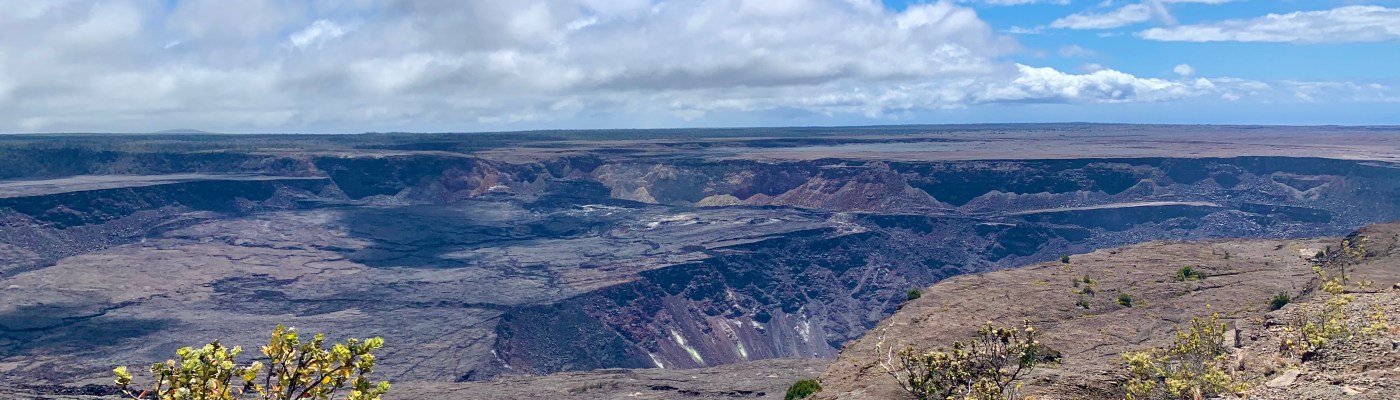
Ranking high on our “Cunningham-Crew-Must-Do” list, was a visit to Hawaii Volcanoes National Park. And even though Kilauea’s last eruption was in 2018, the park still offers a rich heritage, full of Hawaiian history, unbelievable views, and lots and lots of crusty black lava fields.
Along the two(ish) hour drive from Kona, we enjoyed winding roads, with lush tropical greenery on the mauka (mountain) side, and miles of Pacific blue coastline on the makai (ocean) side. Still adjusting to the hot and humid weather (with little to no air-conditioning) we were pleased to be greeted by a light drizzle and 65 degree weather when we reached the Kilauea Military Camp (KMC). Established in 1916, KMC resides within Hawaii Volcanoes National Park, making it a unique resort destination. (Eligibility is open to all active duty and retired Armed Forces, their dependents, and current or retired DOD employees). While the camp has certainly retained its authentic military charm, we enjoyed our 4-bedroom lodging, complete with never-ending hot water!! We even squeezed in some bowling, much needed playground time, and a friendly family game of volleyball.

Our first stop on our agenda was Kilauea Caldera. The night before we watched a movie about the eruption history of Kilauea (gotta squeeze in educational opportunities for the kids). However, I was still unprepared for the sheer expansiveness and magnitude of the shield volcano. Kilauea is considered the most active volcano in the world with steam still continually spiraling up out of the Halema’uma’u Crater. It was simply breathtaking! I can’t imagine how mesmerizing it must have been to watch hot glowing lava spewing forth.

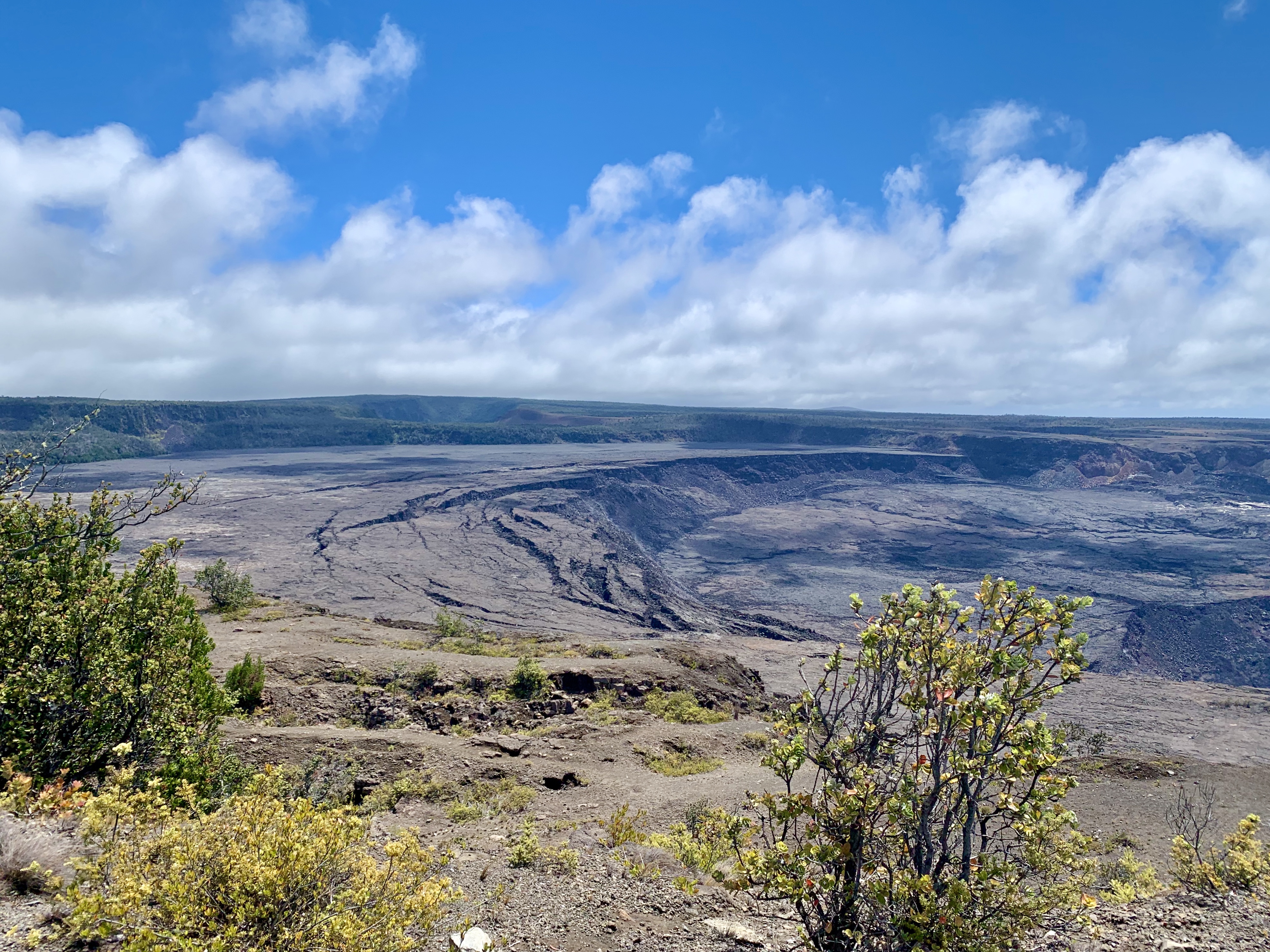
After leaving the crater, we made a quick stop at some of the steam vents. It is fascinating to see steam billowing up throughout different vents all throughout the park, leaving you to wonder what boils below…


Hopping in the car we drove the 38 mile scenic roundtrip down Chain of Craters Road which descends 3700 ft and ends near Holei Sea Arch. The temperature change was a drastic 26 degrees, raising from 64 degrees to 90 degrees by the time we reached the end of the road. Along the way, we drove through acres and acres of lava fields, all dated with the year of their eruption. Did you know there are different types of Hawaiian lava? We encountered both of them at the park: pahoehoe (‘paw-hoey-hoey”) and aa (“ah-ah”). Pahoehoe is dark colored and has a smooth or ropey appearance. Aa is formed from fast flowing lava and creates broken chunks called “clinkers”.

Pahoehoe Lava 
Aa lava 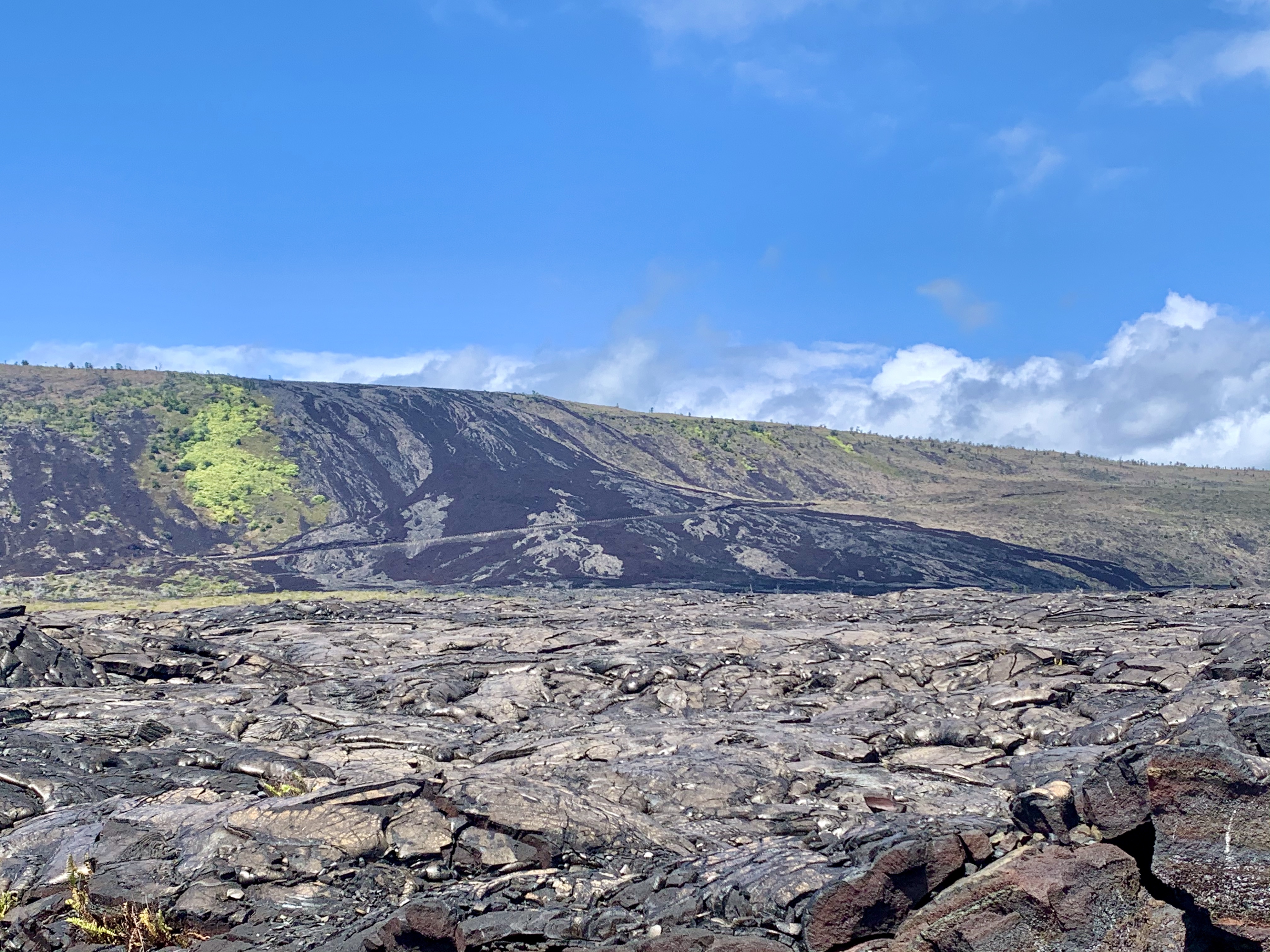
Lava Flow Remains 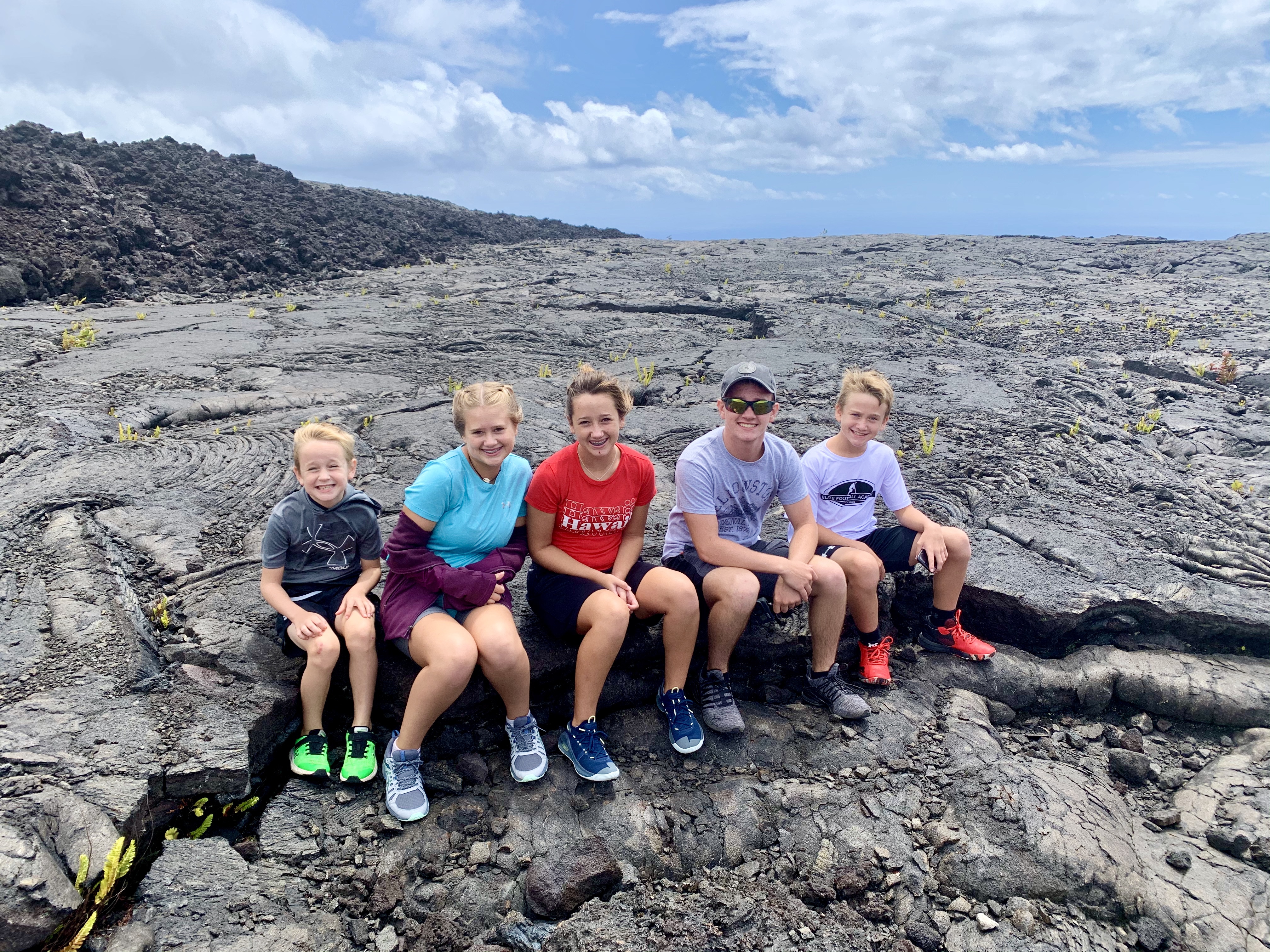

The Holei Sea Arch was there to greet us as we walked along the lava-ridden coast. It is humbling to look out across the massive Pacific and know that there is nothing between you and nearest continent except roughly 1,860 miles of water! With that in mind, I kept a little extra distance from the cliff sides!

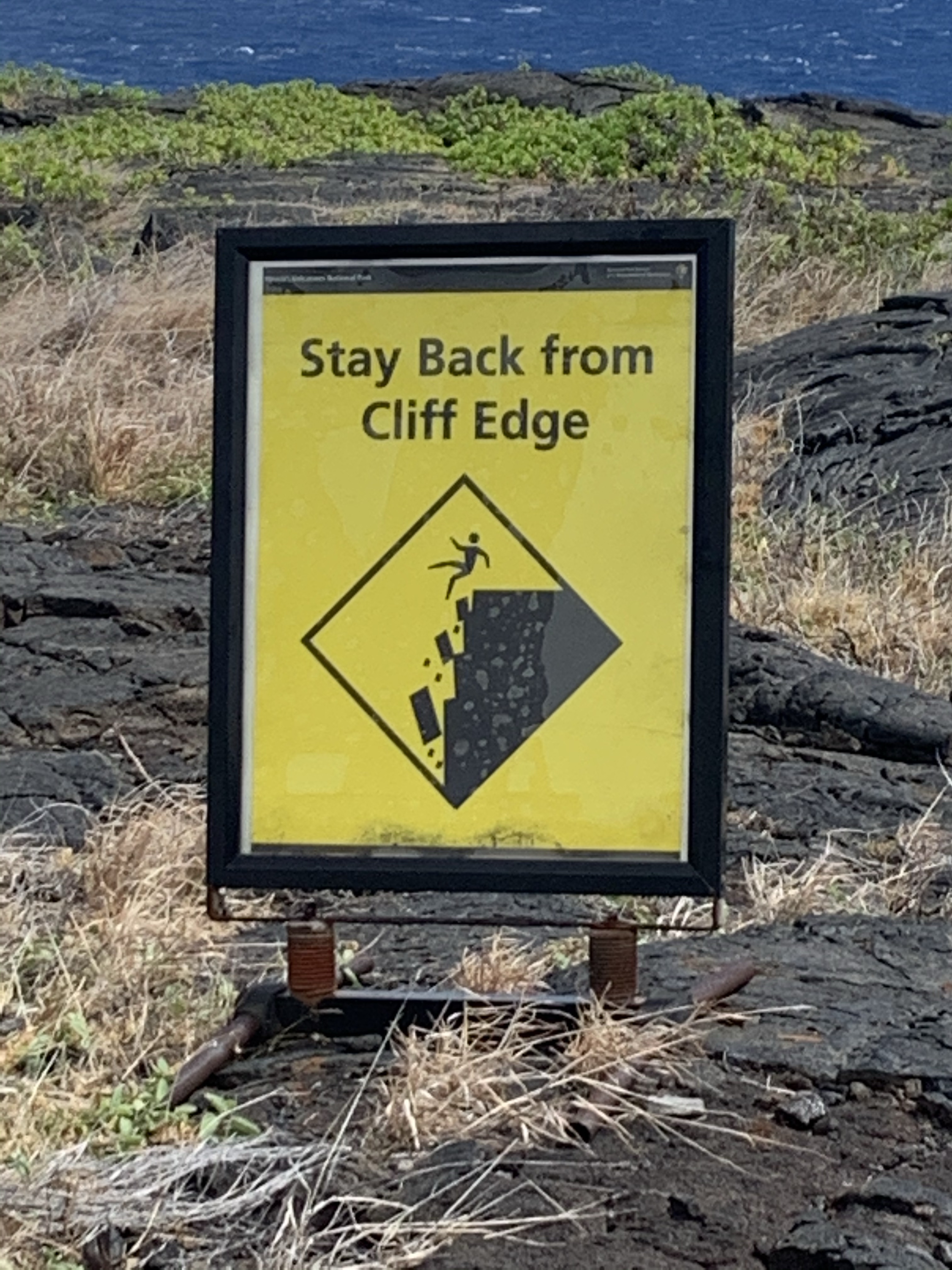
Didn’t want this sign to me! 
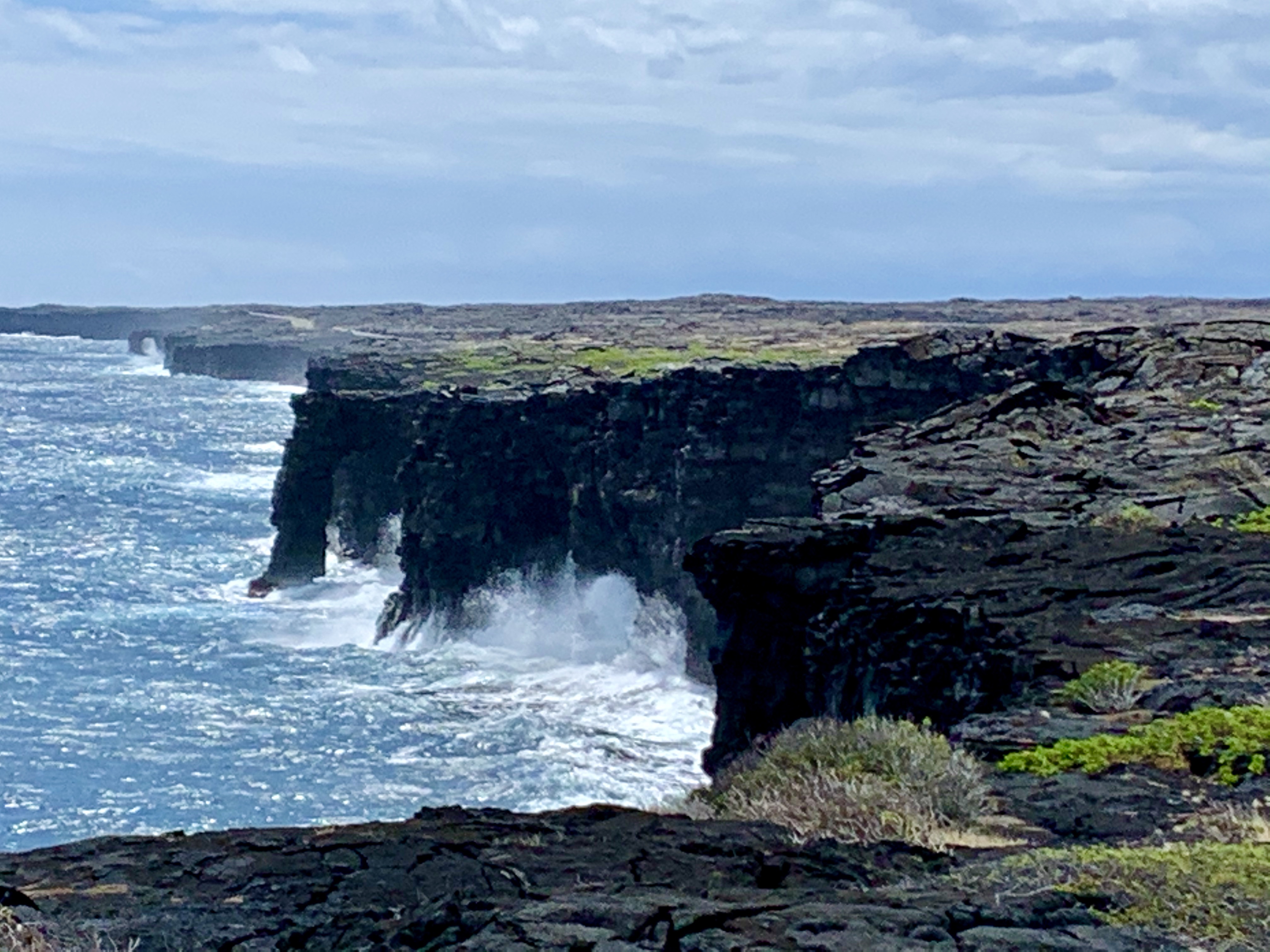
Holei Sea Arch
Hopefully, we will journey back to Hawaii Volcanoes National Park again soon, as there was so much more to see and do!
 The Cunningham Crew